Blog

The Making of the School Pride Ponds

February 23rd, 2011

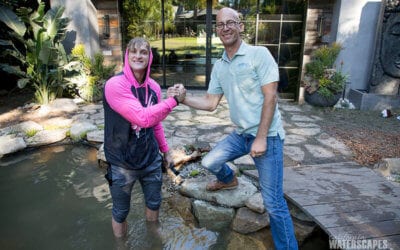
This video shows the making of the School Pride ponds at the Los Angeles Center for Enriched Studies (LACES) High School in Culver City.

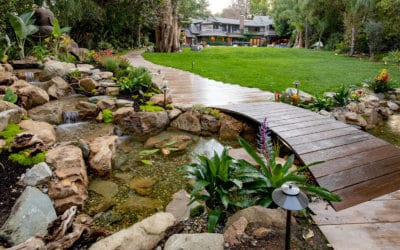
This is a full video of the work California Waterscapes and its sister company Pacific Pavingstone did to completely upgrade the Quad area. This was done in conjunction with the new School Pride show. This involved two ponds, a pondless creek bed, a paver bridge over the main pond and a long and winding pavingstone path including two paver circles and walls for students to talk and relax between classes.

You will see the building of all the ponds and the pondless stream in addition to all the paving stone paths and artificial turf.


Water Gardening – The Tranquil World

February 10th, 2011

Water Gardening

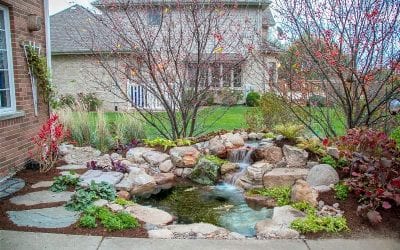
Natural Waterfall and Pond

The water gardening lifestyle is becoming more and more a way of life in Southern California.

More and more home owners are stepping out of their work-a-day world of deadlines, cell phones, traffic jams, anti social co-workers and entering the tranquil sanctuary of their own water garden.

How many people do you know who escape from our technical concrete jungle and go to a lush green golf course, escape for a hike in the mountains, venture into a forest or lay at the beach soaking in the sounds of cascading waves?

40 to 60 hours a week most of us are surrounded by computers, pagers, mass media, Xerox machines and all the other things that come in this vast sea of circuits and technology that is anything but natural.

C-3PO from Star Wars may feel at home in this environment, but for most of us humanoids, this daily interaction leaves us with a longing to escape to Mother Nature.

And that is the pleasure of water gardening!  The Zen atmosphere and tranquility of Mother Nature right in your backward.  No need to jump on a plane or to drive hours out of the city to feel close to nature.

Imagine sipping tea with your spouse, listening to soothing sounds of water spilling over the rocks and into your pond.  Colorful Koi swim about a lily filled pond.  You take a deep breath and inhale the aroma of the surrounding plants and flowers.  A blue jay lands, skips over to the water and bathes in the stream. All this while having a quality conversation with your spouse that you can't have in front of the television.

Water gardening provides a hobby for the whole family to enjoy. It's very common to hear a home owner describe how their water feature has increased communication between them and their spouse, how it's lured the children away from the mesmerizing effect  of video games and TV with pond critters that are far more interesting.

Water features also make an excellent place to entertain friends and family. Chat with neighbors over coffee or just to spend some quality alone time with oneself.

Natural and magical ponds

The new eco-friendly water features support all kinds of beautiful creatures to enhance that close-to-nature feeling.  Fish, frogs, Koi, dragonflies and turtles are a few of the beautiful critters that you can purchase and or naturally attracted to your pond.  Birds of all kinds visit often to drink and bath in the clear water. There are a variety of lilies, flowers, aquatic plants, and grasses that enhance the beauty and fragrance of your water garden.

This a great time to add a natural pond and waterfall to your backyard.  Call today or fill out a Free Estimate form on this page to receive your Free Design Consultation with one of our expert water gardening professionals.

Pond Design – Pond Construction

January 24th, 2011


Pond Design

It is important to work out your pond design before beginning any construction. Overlooking any essential factor can become very costly in terms of having to redo work already completed.

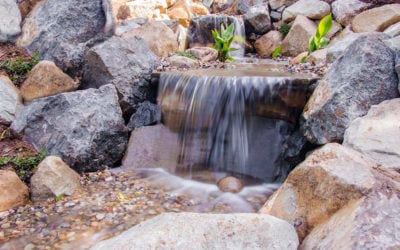
Natural Waterfall

Pond Construction

One essential ingredient to consider in your pond construction is the depth of the pond.

Determining Pond Depth

There are many factors to consider when choosing a pond depth. These include climate zone, fish number, size and type, sunlight conditions, winterizing options, pond size, and shape.

As a rule of thumb, California Waterscapes has experienced that a two foot deep pond can support fish and plants year round in the extreme winter and summer temperatures. With proper precautions, a two-foot deep pond can be made to support aquatic life virtually anywhere.

Of course, another consideration is the building and safety requirements. Most city municipal codes have regulations that state that once a pond is over 2 feet it must be treated as a pool and must follow the same rules and regulations of pool safety such as fences and locked gates. In some cities, this is 18 inches. So keep that fact in mind in your pond design.

Our design consultants will help you determine the appropriate depth for your pond so that it will work with your location and your other pond elements. Contact us today for your Design Consultation and receive a design consultation with one of our expert water garden professionals.

Constructing Eco-system Pond

Pond Bacteria – What it is and why you need it in your pond?

January 24th, 2011

Pond Eco-system

Bacteria are microscopic unicellular organisms, typically spherical, rod-like, or spiral and threadlike in shape, often clumped into colonies. Some bacteria cause disease, while others perform an essential role in nature in recycling of materials.

For example, bacteria aids in the recycling of decomposed organic matter into a form available for reuse by plants. Some forms of bacteria are used to stabilize organic wastes in wastewater treatment plants, oil spills, or other pollutants.

Bacteria is very important in the function of your pond ecosystem. There are countless types of bacteria, something for every function. Bacteria work together to form a giant recycling plant by taking waste and dead material and converting it back into usable nutrients in the food chain.


Bacteria prefer to be anchored to a substance like rocks or gravel, and are found in largest quantities in the mist of decomposing leaves. Putting rocks and gravel in a pond significantly reduces the amount of muck buildup in the bottom of the pond. This is because rocks and gravel provide many places for bacteria to call "home", much more than a bare liner. More bacteria means more capacity to break down fish waste and plant debris, which leads to better water quality.

The type of bacteria we recommend using in our pond systems is a safe, non-toxic combination of specially blended bacteria and enzymes. It is designed to assist in controlling water quality and is similar to the bacteria naturally present in oceans, rivers, streams, and lakes in that it assists in completely breaking down dead organic matter thereby minimizing the release of nutrients and toxins into the water. It is recommended that this special mix of bacteria be introduced into a newly established water garden and continued thereafter in two to three week intervals.

Natural Pond Eco-system

What is a Formal Pond?

January 19th, 2011

For thousands of years, creative architects have employed formal ponds to provide focus, noise abatement, and evaporative cooling in both public and private gardens.

Although formal ponds were traditionally built of stone, today they can also be built with brick, concrete, or pressure treated wood.  A raised perimeter wall can highlight the attractive structural materials and offer visitors a place to sit by the water; a flush edge is easier to build and will make the garden feel more spacious. Simple rectangular shapes with vertical side walls are recommended for ease of waterproofing, but other shapes are possible.

Fish and plants are optional, but a fountain is a virtual necessity.  A depth of 10" to 24" is sufficient.

Formal ponds can match a more formal architectural design but can be difficult to maintain and expensive to build.  Their pumps can clog easily and there is no biological or mechanical filtration.  Also, if built from concrete, it can crack.

Concrete Pond

Pond Algae – Why You Want it and How to Control it?

January 19th, 2011

Aquatic algae, (thought of by many as pond scum) are microscopic plants that grow in sunlit water that contains phosphates, nitrates, and other nutrients.  Algae, like all aquatic plants, add oxygen to the water and are important in the fish food chain. They share many characteristics with plants, although they lack true stems, roots, and do not flower.  Common algae that forms in ponds include planktonic algae (green water algae) and filamentous algae ( string algae).

Algae is actually important and beneficial to a pond or water garden.  It is part of the eco-system we want to establish in the ponds because it helps in maintaining good water quality.  If the pond filtration and circulation system is properly designed, the nutrients and toxins can be controlled, there by controlling algae growth.  The perceived algae problem begins when algae grow in abundance, but this condition is really a symptom or an indicator of excessive nutrients and or toxins in the pond water.

Excess nutrients are typically caused from feeding the fish too much, too often, or both. In addition, leaves, grass, or other organic material find their way into the pond, settle to the bottom and begin decaying and releasing nutrients into the water.

Excess toxins are typically generated directly from fish and decomposing matter. When fish breath they release ammonia into the water form their gills.  If the pond is overstocked, either by too many fish or too large of fish, you may find the water looks like pea soup. In addition, decomposing organic material such as fish waste, leaves, sticks, grass, etc., can generate toxins.

As a general rule, if you are experiencing an algae problem, adding more of the 'right kind' of filtration will help you reduce and manage the amount of algae in your pond. 

This includes:

1. Plants, such as lilies, shade the pond and reduce the amount of sunlight available for algae growth.

2. Fish, especially koi, will eat a tremendous amount of algae.

3. Rocks and gravel provide surface areas for bacteria to colonize in and between the rocks, which is like having an additional biological filter in the pond.

4. Skimmers act as a mechanical filter by removing leaves and other debris from the surface of the pond before they can sink to the bottom and decompose and then turn into either nutrients or toxins.

5. Biological Filters provide an area for bacteria and enzymes to colonize which consume nutrients and help break down organic debris and fish waste that would otherwise contribute to water quality problems.

Algae is a part of nature just like the other parts of the eco-system.  The main goal in keeping clean water is not to attempt to completely rid your pond of algae, but to keep it in balance with nature.

Natural Waterfall and Pond

How Much Sunlight Does a Pond Need?

January 19th, 2011

This is one of the biggest myths surrounding water gardening today. Most books say a ponds needs a minimum of 4-6 hours of sunlight a day for aquatic plants to live. They discourage building a pond in a shady area.

The truth is that aquatic plants do bloom more and flourish better in high sunlight conditions. This is not debatable. What is debatable is how well aquatic plants can do in low light conditions.

With less sunlight, plants will need more fertilization. Time release aquatic plant fertilizers do an excellent job of promoting bloom and foliage growth. Also make sure plants have enough room to grow. Plants left in containers become root-bound and their growth is stunted.

We have even installed ponds inside where there is no sunlight at all. If you have aquatic plants that are shade lovers, they do great and the pond looks wonderful too. So instead of limiting your options by following defined rules, such as a pond's sunlight requirements, adapt your installation procedures accordingly.

Full-shade ponds will have fewer blooms then full-sun ponds but they will also have less string algae. Algae likes sun too!

Natural Pond with Various Plants

Determining my Waterfall Pool Size

January 19th, 2011

If the water is going into a pond, the size of the pond in square feet of surface area needs to be 1 1/2 times the square footage of your waterfall and stream. For example, if your waterfall and stream is 20 feet long and 3 feet wide, then the pond should be 90 sq. feet.

This is to allow the pond to capture all the water from the stream and waterfall when the waterfall is turned off without the water overflowing the pond.

If there is not room to accommodate the size of the pond, then a different technology can be used call a Pondless Waterfall. To learn more about this technology, call one of our consultants at 888-600-7224.

One of our design consultants will help you determine the appropriate size of your waterfall pool or basin.

Natural Waterfall and Pond

Choosing The Best Pond Location

January 18th, 2011

Pond location and pond size are the two most important and, unfortunately, misunderstood aspects of pond design. So many people think the far corner of their property is the best location. People also believe low points in their yard that gather run-off when it rains are naturally suited to building a pond.

These are two of the worst locations to build a pond, yet people automatically assume they are the best.

The water feature needs to be brought up close and personal to the home. Low spots should be avoided because run-off water can pollute a pond and construction is often complicated because wet muddy soil is hard to work in. Excessive ground water levels can shift stone and cause bubbles in the liner.

Place your water feature where people can enjoy it. Even outdoor-loving people spend 90% of their time inside the house. You should try to face the waterfalls toward the house. That way the waterfall is not only visible from the living area, but the sound it creates will echo through the home. When a pond can be seen and heard from the home, its enjoyment is increased dramatically.

Another location you might not have considered is a front yard water feature. Adding a water feature to your front yard adds true curb appeal.

One of our expert design consultants will help you find the perfect location for your pond. Contact us today for your Design Consultation.


Natural Backyard Pond

Positioning a pond.


Can I Build a Pond Beneath My Trees?

January 17th, 2011

Obviously water is a magnet for wind-blown debris. Placing a pond beneath a tree only adds to the debris falling into the water.  But this is why skimmers were invented!

Skimmers are made to handle foliage falling into a pond. Leaves that drop into the pond in late fall do not, because of the sheer numbers, all make it into the skimmer.  As long as most of the debris is collected for you, surrounding trees do not prevent you from having a successful pond.

People also worry that tree roots will penetrate a pond's liner and cause a leak and drastically disturbing a tree's root structure can damage or even kill some trees.  Yes it's true that a tree root is powerful enough to buckle a driveway or crack a sidewalk, yet they do not pierce a rubber liner.  The reason for this is simple. A tree root is programmed to hone in on moisture.  A pond has lots of water but (fortunately for the pond owners), a tree doesn't know that.  Roots simply traverse the surrounding soil beneath a pond instead of going through a watertight barrier.

Ponds installed by trees


Installation of Ponds

Ideally, the best idea is to build the pond outside a tree's drip zone.  A pond is usually 2 ft. deep and if it's located near a tree, you will most likely encounter roots from the tree that, if removed, can severely harm the tree. Not to mention the additional labor in digging out all the roots. For most trees, removing some of their roots and putting a pond over the top of them is not going to kill them but you should always take into consideration the type of tree you're working with. For example, a silver maple is a lot more adaptable than a 100 year old oak.

A naturally wooded lot does pose some design problems, however the aesthetic advantages that surrounding trees add to the setting of the pond make them advantageous to the overall look of the pond.

Our experienced design consultants will be able to answer any questions or concerns you may have about building a pond near an existing tree. Contact us today to request your Design Consultation.


Aquatic Pond Plants

January 14th, 2011

Aquatic plants, while providing the obvious aesthetic appeal to the water garden also serve the important role of helping to maintain the overall health and appearance of your pond. Pond plants help purify the water by reducing nutrients, filtering out sediments, breaking down toxic compounds, and digesting unwanted substances.

Planting a diversity of species in the pond will ensure balanced filtration. Plants such as Cattails have short roots extending only 6-12 inches, where as Bulrushes can extend up to 36 inches allowing each to grab nutrients from different regions.

Rooted aquatic plants also help promote healthy bacteria populations. Without beneficial bacteria, nitrogen levels in the pond would become elevated, causing health problems in fish, diminished water quality, and promoting excess algae.


Certain plants, such as water hyacinth, are more capable than others at removing large amounts of algae-causing nutrients. Some waste water treatment facilities in warmer climates have even been designed specifically to use hyacinths.

Aquatic plants' significance in filtration, their ability to provide better water quality, reduce maintenance and balance the ecosystem, all the while helping to create a more natural looking environment, are all reasons for you to consider the importance of aquatic plants for your pond.


Free Estimate Form

First Name
Last Name
Email Address
Phone Number
Message

Our specialty trademarks are:

Some of our awards and associations are: